


Grado 8
Ciencias: Ciencias físicas

Los estudiantes se enfocan en la materia y sus interacciones, movilidad y estabilidad, energía, ondas y sus aplicaciones. También pueden explicar fenómenos del mundo real comprometiéndose en la ciencia, prácticas de ingeniería y aplicando conceptos transversales.


Preguntas de las pruebas de muestra
En esta sección encontrarás ejemplos de preguntas de examen que muestran las habilidades y los conceptos que deberían conocer y comprender los estudiantes.
-
 1
-
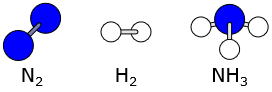
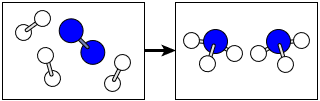
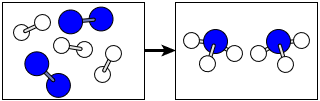
Nitrogen gas (N2) reacts with hydrogen gas (H2) to form ammonia gas (NH3). Models of the molecules are shown.
-
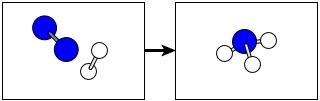
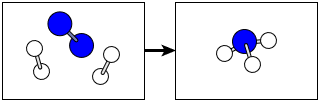
Which model correctly shows that the mass is conserved in the reaction?
-
-
A
-
B
-
C
-
D
-
A
-
-
C

-
C
-
-
2
-
Plastic A is commonly used to make disposable water bottles. Plastic B can also be used to make these bottles. Information about Plastic A and Plastic B is given in the table.
Plastic Common Source of Raw Material Energy Used to Make One Kilogram of Plastic A Oil 16.5 megajoules B Corn 12.1 megajoules -
Based on the information in the table, explain two ways how using Plastic B instead of Plastic A to make disposable water bottles can help conserve natural resources. Enter your answer in the box provided.
-
2 point
Sample Response:
Plastic B comes from corn, which is a renewable resource. Plastic A comes from oil, which is a nonrenewable resource. It takes less energy to make Plastic B than to make Plastic A, so making bottles out of Plastic B will conserve energy.
1 point
Sample Response:
Plastic B comes from corn, which is a renewable resource (it can be grown again). Plastic A comes from oil, which is a nonrenewable resource (it takes a long time to make again). OR
It takes less energy to make Plastic B than to make Plastic A. Making bottles out of Plastic B will conserve energy.
0 point
Sample Response:
Plastic B does not use any natural resources. OR
Plastic B uses more energy than Plastic A does. OR
Plastic B contains less energy than Plastic A does.
-
-
3
-
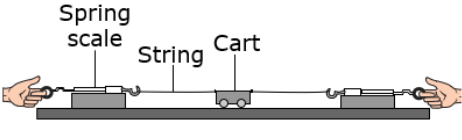
Two students are investigating how balanced and unbalanced forces affect the motion of a small cart with freely rolling wheels. The students want to demonstrate three cases of motion:
-
- acceleration to the right
- acceleration to the left
- no acceleration
-
The students use string to attach two spring scales to the cart so that the forces exerted on it can be measured in newtons (N), as shown in the figure. The cart is then released from rest.
-
-
Which set of forces will allow the students to demonstrate all three cases of motion?
-
-
A

-
B

-
C

-
D

-
A
-
-
B

-
B
-